Ian Solomon
MAYOR CONGRATULATES GOLD COAST 2007 AUSTRALIA DAY AWARD WINNERS
Former Olympian, world-record holder and City Mayor Ron Clarke congratulates Citizen of the Year recipient and finalists at today’s 2007 Gold Coast’s Australia Day Awards. Councillor Clarke stated he was continually overwhelmed by the time and energy people put into improving their community.
Southport business identity and Chamber of Commerce President Ian Solomon is one of three finalists for 2007 Citizen of the Year.
Mr Solomon was nominated and acknowledged for his substantive efforts leading Southport’s Chamber of Commerce and Industry for over a decade broadening and strengthening the city’s primary business precinct, assisting attract new investment, employment and development. In addition to fostering greater connection between members, milestones of his tenure included the re-opening of the troubled Nerang Street Mall and assisting the adoption a new Southport planning scheme which, after years of stagnation, has attracted a number of major new build projects to downtown Southport.
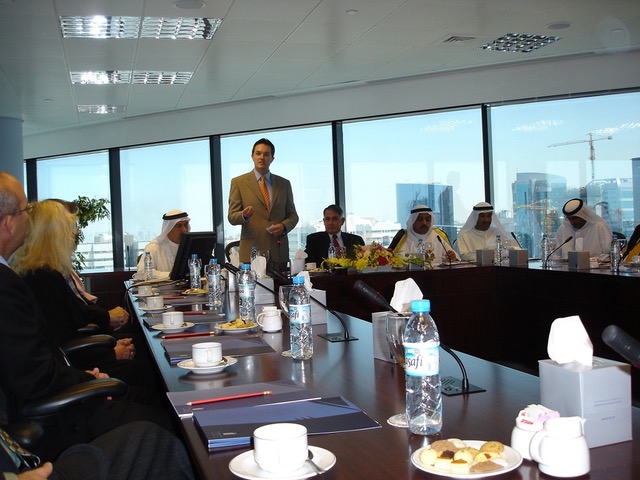
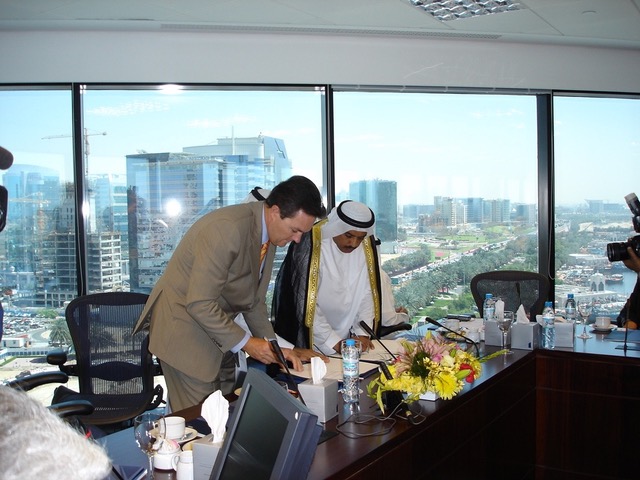
A tireless advocate for the betterment of the Gold Coast at large, Mr Solomon was also the primary driver of commercialisation of the Gold Coast’s sister-city relationship with Dubai. His initiatives resulted in a MOU with Dubai which has opened a floodgate of business opportunities for Gold Coast businesses already in the millions of dollars.
In addition to his own property investment and rural enterprises, he is a member of the State government’s South-East Regional Electricity Council, has or serves on a string of other council advisory or policy committees and community associations, and participated in numerous interstate and overseas trade and goodwill missions.
He has been a prime-mover in the push for greater understanding and recognition of the challenges the city faces and been a catalyst for the City Image campaigns and delegations to Canberra to best air and illuminate elected representatives and bureaucrats as the societal, economic and demographic misconceptions and challenges faced by the rapid growing region.
“Rather than maximising the advantages of such safe seats to advance nation shaping debate or leave a local legacy, our elected representatives seem to have been asleep at the wheel luxuriating in such privilege, he opined. After just two-missions and road-shows with council officers, business delegates and latterly Councillor and real estate identity Max Christmas, we’re already attaining greater and more appropriate recognition which will directly translate into funding and service commitments.
Mr Solomon is also has a history as an accomplished fund-raiser within the organisations he supports, having driven campaigns to assist the Salvation Army – especially at Christmas, as well as co-organiser of an event that raised $30,000 in one evening, purposefully to fund a transport van for hospital patients.
Notably, Mr Solomon has been a constant and vocal opponent of the so-ascribed Rapid Transit Project, citing inflexibility, manifestly low or unrealistic construction cost estimates, unquestionable disruption or destruction of businesses along the route citing technical improbabilities such projects have floundered with in many other cities around the world.
“We’re on the cusp of technological breakthroughs in on-demand driver services reliant on internet and mobile communications, yet here is a proposal to build slow and inflexible trams at vast cost. This is 1820s Victorian-era technology, heavy rail on inflexible steel tracks. The resultant build will leave an ugly scar right through the guts of both Southport and Surfers Paradise, the city’s two main commercial precincts, he said. Elsewhere tram routes have created a ‘corridor of death’ lined with empty premises, faltering businesses or become urban wastelands of piled garbage, skips and scooter parking.
“Call it rapid or however they like to talk it up, there’s nothing sexy, space-age or fast about trams – there’s nothing light about light rail, he said.
“Trams have a top speed of about 80 kph if in their own corridor but will have to crawl when mixed in with regular traffic and pedestrian intense areas. Rubber wheeled articulated busses can accommodate close to 200 people and cost a tiny fraction of a tram network. Such busses can be assembled locally – we have two acclaimed bus manufacturers right here in the city, he said. “I have read these trams will come from Austria or Germany, possibly even the steel rails as well. Seriously, how blindingly dumb is that?”, he asks.
“Busses can be operated in series on demand and re-deployed to major events and will go a long way to relieving the east-west congestion which the city is experiencing. And if there is a breakdown or accident, they can be quickly substituted whereas a broken tram stops the network for hours with corresponding chaos, inconvenience and commercial impacts.
“We’ve heard all kind of rubbery numbers thrown around such as $120 million for a first stage depending on whom is quoted on the day, but one thing’s for certain, these numbers will blow out the minute the build starts. I wouldn’t be surprised if it gets up to hundreds of millions by the time it gets to cross Nerang River.
Mr Solomon outlined he has visited Casablanca, Istanbul, Milan, Zaragoza, Dallas and Los Angeles, both its Blue Line and Long Beach systems – all at his own time and expense – with the view to getting a deeper understanding of trams efficiency and impact.
“Objectively, you don’t need to visit, he says. “The internet is awash with information that overwhelmingly shows the flaws of such rigid systems and its demonstrable unsuitability for an elongated, coastal strip with multiple water crossings and just 400,000 population. Governments and elected representatives have risen and fallen on these kind of proposals. In LA, the most heavily utilised tram in the world, even after 50 years, you could hand every single passenger $40 for every single movement and you still wouldn’t cover the build cost.
Mr Solomon says it is disappointing that our civic leaders haven’t attuned to the depth of division this project has brought. “It is tearing the community apart. There is no leadership, no vision and no statesmanship to simply recognise this outdated, rigid technology is folly and splitting the community. It will create huge financial and personal loss and great heartache to those impacted now and into the future. As has happened everywhere else, every stage will bring protests as the negative impacts are felt as the bulldozers roll in.”
Mayor Clarke campaigned on and was no doubt elected on an anti-tram stance, however was persuaded by faceless technocrats and a rump of councillors to change his mind which was staggeringly disappointing to those that voted for more intellectual rigour and foresight in the role, Mr Solomon said. The loudest supporters endeavouring to foist this upon us as a ‘miracle fix’ for the city’s transport future will be out of elected office, retired or gone from rate and tax-payer funded roles leaving successors to fund and manage a costly blight.
Demonstrative of this ill-will, Mr Solomon was verbally attacked on the issue by a senior State Government minister. He failed to be briefed or read material prior and couldn’t refute or expand on basic facts about the proposal put to him and resorted by calling me bastard at a forum of 200 people, he recalled. I don’t care. He’ll be voted out, dead and buried before any tramway is ever finished.
Mr Solomon is one of only three Honorary Life Members of Southport Chamber of Commerce and Industry, which, at 120 years, is Queensland’s longest established chamber.
A prolific writer and essayist, for 15 years through to 2002 Mr Solomon was the publisher of Queensland Property Report, a periodic industry magazine covering strata, property law, developments, planning and construction news. This afforded him great connection with a Who’s Who of all levels of government, other media people and leaders across the broader industry – as well as attendances at “the opening of every envelope”.
He travels extensively for business and pleasure and splits his time between the city and his rural pursuits which include premium cattle production and trying his hand as a vigneron and winemaker.